
Not all conference swag is created equal — and that’s the point. A tiered approach to branded merchandise ensures that your highest-value stakeholders feel genuinely recognized, while general attendees still walk away with something useful and memorable. Done well, swag segmentation reinforces relationships, reflects your brand’s attention to detail, and gives every person in the room a reason to remember you.
Here’s a practical breakdown of what to consider for each group:
1) VIP Swag — Exclusive & Luxury
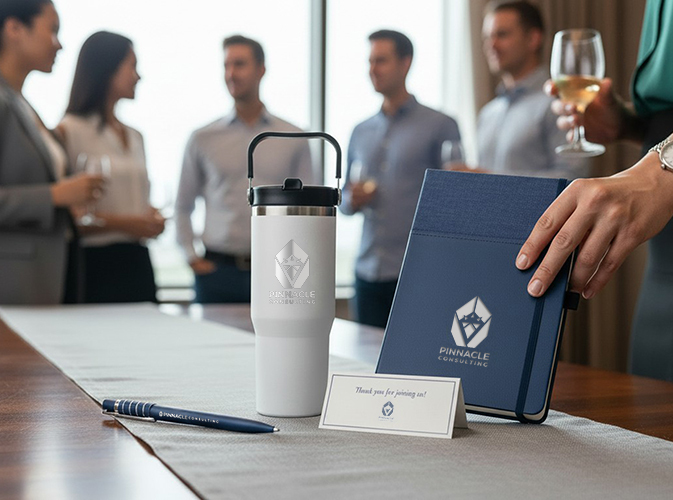
VIPs and executives set the tone for your event. Their swag should reflect that. Think high perceived value, understated branding, and items that feel genuinely considered rather than mass-produced. This is not the place for logo-heavy merchandise; subtlety signals quality.
What to include:
- Curated gift sets — a thoughtfully assembled mix of premium tech, artisan snacks, or luxury lifestyle items
- Premium tech — wireless earbuds, compact Bluetooth speakers, or high-quality portable power banks
- Luxury apparel and gear — leather-bound notebooks (Moleskine or similar), branded leather folios, or premium backpacks
- Exclusive experiences — behind-the-scenes event access, backstage passes, or, for virtual events, premium branded home-office gear
When a VIP opens their swag, it should feel like a gift and not a giveaway.
2) Speaker Swag — Thoughtful & Personal
Speakers invest significant time and energy into making your event a success. Their swag should acknowledge that. The best speaker gifts lean into appreciation and personalization, with a nod to wellness and recovery after a high-energy day on stage.
What to include:
- Customized items — personalized leather-bound notebooks or premium pens with embossed initials
- Comfort and wellness promotional items — aromatherapy candles, high-end travel kits, or premium soft cotton hoodies
- Appreciation items — local artisan snack packages, curated coffee or tea samplers, or quality insulated drinkware
A small personal touch — even just a handwritten note alongside the gift — goes a long way toward making speakers feel valued.
3) Staff Swag — Functional & Unified
Your staff are the face of your organization on the day of the event. Their swag serves a dual purpose: It needs to look sharp and consistent while also being genuinely useful across a long, physically demanding day. Function comes first, but presentation still matters.
What to include:
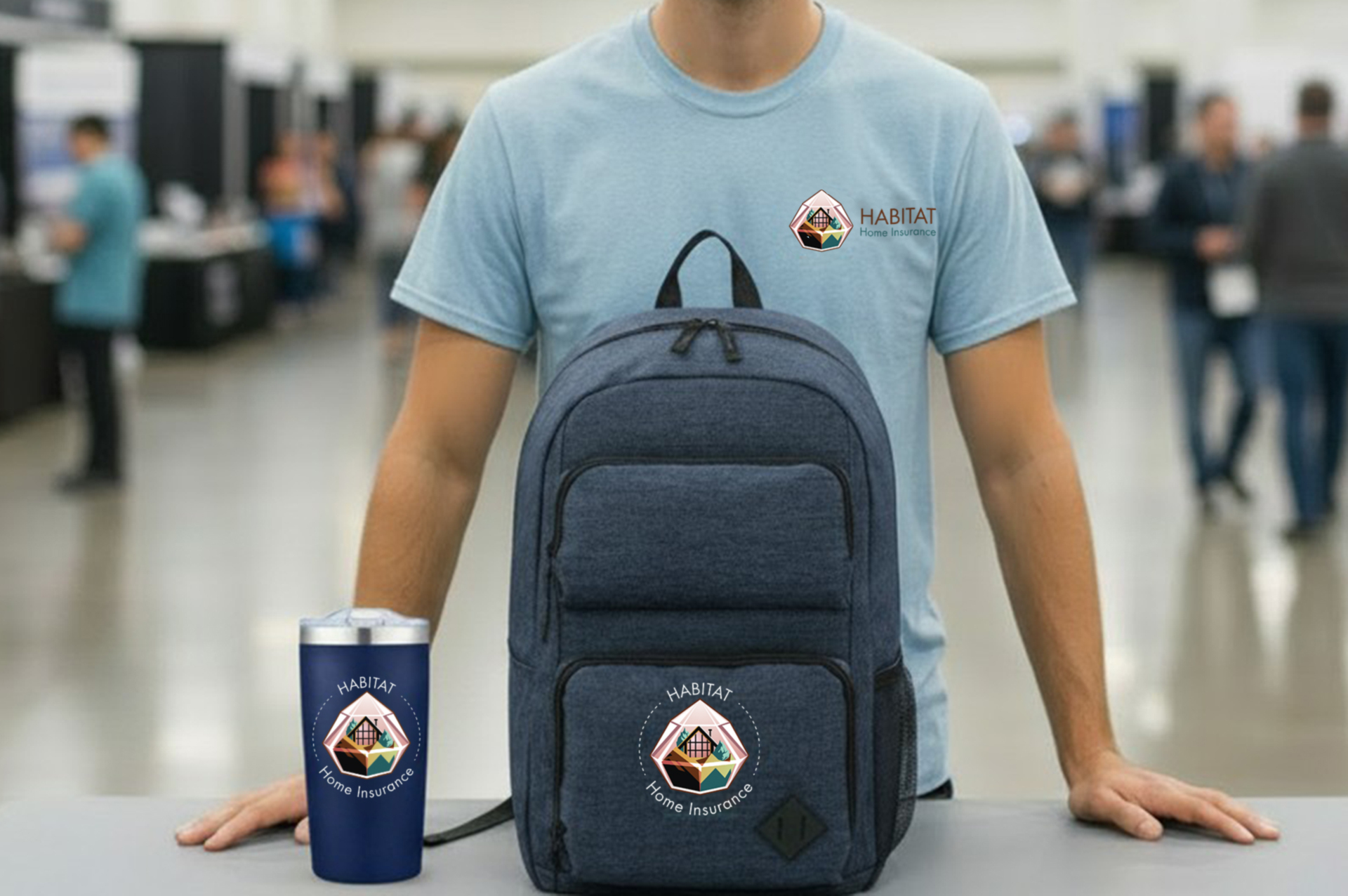
- Uniform custom apparel — matching embroidered polo shirts, quality branded t-shirts, or branded beanies and hats for easy crowd identification
- Event-functional gear — comfortable branded backpacks or sling bags for carrying materials throughout the day
- Durable reusable water bottles — practical, on-brand, and essential for keeping the team hydrated
Consistency in staff presentation builds attendee confidence and reinforces a polished event experience from the moment guests arrive.
4) Attendee Swag — Practical & Memorable
General attendee swag is your highest-volume investment, which makes it the most important to get right. The golden rule is simple — if they won’t use it after the event, don’t give it to them. Aim for items that earn a place in daily life and keep your brand visible long after the conference ends.
What to include:
- Daily use items — premium travel tumblers, reusable water bottles, or quality branded notebooks
- Tech giveaways — 3-in-1 charging cables, webcam covers, or smartphone popsockets
- Wearable and useful items — comfortable branded t-shirts, custom socks, tote bags, or branded sunglasses
- Low-cost essentials — stickers, lanyards, and pens ($0.50- $2 range) for high-volume, general distribution at registration
Prioritize portability with this group. Attendees often travel to conferences, and bulky or fragile items get left behind in hotel rooms.
Summary: Swag Tiers at a Glance
| Tier | Focus | Key Qualities | Examples |
| VIP | Exclusive / Luxury | High value, discreet branding | Leather bags, Bluetooth speakers, curated gift sets |
| Speaker | Appreciation / Quality | Personal, wellness-forward | Premium hoodies, candles, artisan food, embossed journals |
| Staff | Uniformity / Function | Consistent, practical, durable | Branded polos, hats, comfortable backpacks |
| Attendee | Utility / Brand Awareness | Useful, portable, memorable | Tumblers, tech accessories, tees, stickers |
A Final Note for 2026
The swag landscape is shifting. Attendees — and clients — are increasingly aware of sustainability, and a pile of cheap branded trinkets does more harm than good to your brand perception. For 2026 events, prioritize sustainable materials (recycled PET, organic cotton, FSC-certified paper products) and invest in fewer, higher-quality items over high-volume giveaways that end up in landfill.
The brands that get swag right aren’t the ones spending the most. They’re the ones being the most intentional.
FAQs:
1) What is tiered conference swag and why does it matter?
Tiered conference swag is a segmented approach to branded merchandise where different groups—VIPs, speakers, staff, and attendees—receive different items. It matters because it aligns perceived value with audience importance, strengthening relationships and improving overall brand perception.
2) What should you give VIPs at a conference?
VIP swag should feel exclusive, high-value, and thoughtfully curated. Premium tech, luxury notebooks, leather accessories, or curated gift sets work well, especially with subtle branding that emphasizes quality over promotion.
3) How should speaker swag be different from attendee swag?
Speaker swag should be more personal and appreciation-focused, often including customized items, wellness products, or curated gifts. Attendee swag, by contrast, should prioritize practicality, portability, and everyday use to maximize long-term brand visibility.
4) What is the purpose of staff swag at an event?
Staff swag is designed for function and consistency. It helps create a unified, professional appearance while providing practical items—like branded apparel, bags, and water bottles—that support staff throughout the event.
5) What makes good attendee swag for conferences?
The best attendee swag is useful, portable, and relevant to daily life. Items like reusable water bottles, tech accessories, tote bags, and comfortable apparel are more likely to be kept and reused after the event.
6) How do you decide what swag each group should receive?
Start by prioritizing audience value and role at the event. Higher-tier groups (VIPs, speakers) should receive more personalized and premium items, while larger groups (attendees) benefit from scalable, high-utility products.
7) How can conference swag improve brand recall after an event?
Swag that gets repeated use—like drinkware, bags, or wearable items—keeps your brand visible in everyday settings. The more useful the item, the longer it stays in circulation and the more impressions it generates.
8) What are common mistakes to avoid when planning conference swag?
Common mistakes include giving the same item to all audiences, choosing low-quality items that won’t be used, and ignoring portability. Overloading attendees with bulky or generic swag can reduce overall impact.
9) How important is sustainability in conference swag planning?
Sustainability is increasingly important. Choosing materials like recycled PET, organic cotton, or FSC-certified paper—and focusing on fewer, higher-quality items—helps improve brand perception and reduce waste.
10) How much should you spend on conference swag by tier?
Budgets should scale with audience importance. VIP and speaker items typically justify higher investment per person, while attendee swag should balance cost efficiency with usefulness to maximize overall ROI.