Real estate is a relationship business that runs on referrals — and the right promotional products help agents build those relationships at every stage of the client journey. This guide covers all four lifecycle moments: open house giveaways that capture leads and create first impressions, farming and prospecting items that keep your name in a neighborhood year-round, premium closing gifts that feel personal rather than promotional, and post-close referral kits that turn satisfied buyers and sellers into a steady stream of repeat business.
Every item connects to
real estate promotional products
— organized here by how agents think and buy, not just by product category.
KEY TAKEAWAYS
- The most effective real estate promotional products are tied to a specific lifecycle moment — open house, farming, closing, or post-close referral — rather than ordered generically.
- Open house giveaways should be inexpensive, practical, and branded with your direct contact information, so every visitor leaves with a way to reach you.
- Farming items that live on the refrigerator or in the junk drawer — magnetic calendars, sports-schedule magnets, ice scrapers — keep your name visible for months without feeling like advertising.
- The best closing gifts feel personal, not promotional — engraved drinkware, custom cutting boards, and personalized doormats consistently get displayed, used, and shared on social media.
- Post-close referral kits and home-anniversary gifts are among the highest-ROI investments in an agent's marketing budget because they work on a relationship that's already been established.
- Personal branding wins in real estate — agent name, photo, direct phone, and QR code outperform generic brokerage logos on every item except premium closing gifts, where subtlety is the point.
Why Promo Products Work Differently in Real Estate
Walk into any industry conference and you'll find branded pens, tote bags, and tumblers. What makes real estate different is the time horizon. A corporate marketer is trying to build awareness over weeks or months. A real estate agent is trying to stay top of mind for years — because the average homeowner moves only every 8 to 13 years, according to the National Association of Realtors. That means the branded calendar on a client's refrigerator is a strategic investment in a relationship that may not produce another transaction for a decade.
The referral math reinforces this. According to NAR, 88% of buyers work with an agent they were referred to or have used before. In a business where the primary growth driver is word of mouth, every branded item a past client keeps and sees is quietly working to generate the next referral. The promotional product isn't marketing — it's relationship maintenance made tangible.
Research from the Advertising Specialty Institute (ASI) shows the average promotional product generates more than 3,100 impressions over its lifetime, and 85% of recipients remember the brand behind the item. For an agent whose livelihood depends on being the first name that comes to mind when a neighbor decides to sell, that kind of sustained recall is exactly what a strategic promo budget is buying.
There's also a personal-brand dimension that separates real estate from most industries. Most agents brand themselves — their name, face, and direct contact information — not just their brokerage. The items that work best reflect this reality. A magnet with an agent's photo and cell number is infinitely more useful than a generic brokerage magnet. A closing gift engraved with a family's name is infinitely more memorable than one with a corporate logo. The products covered in this guide are organized around these realities.
The 4 Real Estate Lifecycle Moments
Real estate transactions follow a predictable arc, and each stage has distinct promotional product needs. The mistake most agents make is treating all four moments the same — handing out the same branded pen at an open house and as a closing gift, for example. This guide breaks each stage into specific product recommendations calibrated to the moment's purpose, the agent's brand, and the recipient's expectations.
-
>> Stage 1: Open House Giveaways & Sign-In Incentives
An open house is a first impression at scale. In a two-hour window, an agent might meet 15 to 40 potential buyers, neighbors, and curious locals — each of whom leaves with a mental snapshot of the home, the experience, and the agent. The right giveaway ensures they also leave with something that keeps that agent's name and number within reach when the moment to buy or sell arrives.
The open-house giveaway has two jobs: it incentivizes sign-in (which builds the agent's lead list) and it creates a touchpoint that outlasts the visit. The most effective items are inexpensive enough to set out freely, small enough to slip into a pocket or purse without thought, and useful enough to survive the drive home.
-
Branded pens: The undisputed workhorse of open-house marketing. Every visitor picks one up for the sign-in sheet, and most take it with them. A quality pen with the agent's name and number is the single most cost-effective open-house investment available.
Shop custom pens
-
Custom notepads and sticky notes: A notepad branded with the agent's contact information gives buyers a place to jot notes during the tour — and takes that branding home to a desk or refrigerator. Sticky notes with the agent's info are particularly effective because they end up stuck somewhere visible.
Shop custom notepads
-
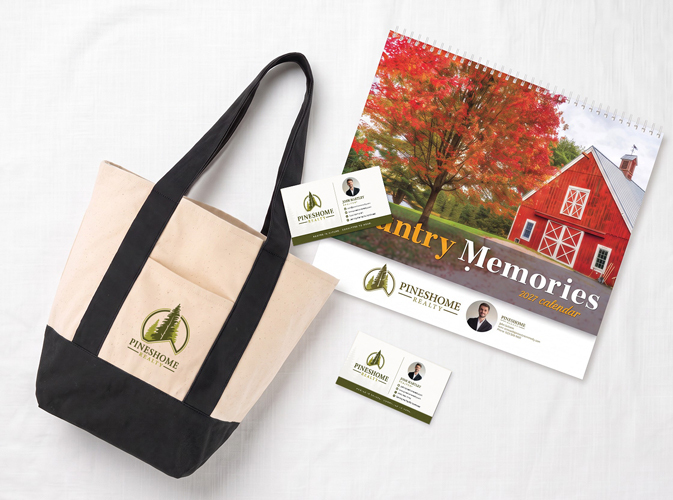
Reusable tote bags: Give visitors a branded bag to carry home the spec sheet, flyer, and any other materials from the showing. Totes that leave the open house go on to grocery trips, errands, and farmers markets — generating brand impressions well beyond the event.
Shop custom tote bags
- Water bottles and koozies: For weekend summer open houses, a cold water bottle or a koozie is genuinely welcome — and genuinely remembered. These items cost little more than a pen but carry significantly more perceived value.
- Kids' items: Crayons, coloring books, and small toys keep young children engaged during showings and signal to parents that the agent is attuned to family needs. A small, thoughtful touch that can make a real difference in how a family remembers the experience.
- Home-scented candles, coasters, and magnets: For higher-end listings, a small "take one" keepsake on the kitchen counter or entry table elevates the experience and gives serious buyers a reason to pick something up that carries the agent's branding home.
Browse the full
open house essentials collection
for a curated selection of the most popular open-house giveaway items.
-
>> Stage 2: Farming, Prospecting & Neighborhood Visibility
Real estate farming is the practice of consistently marketing to a defined geographic area — a neighborhood, a ZIP code, a development — with the goal of becoming the go-to agent when anyone in that area decides to buy or sell. It's one of the most methodical and ultimately one of the most rewarding marketing strategies in residential real estate. And the promotional products that support it are different in almost every way from open-house giveaways.
Farming items need to outlast the initial distribution, earn a place in the home or car, and continue generating brand impressions for months. Rather than feel like advertising, the best farming products become something useful that the neighbor happened to receive. When someone reaches for the refrigerator every morning and sees an agent's name and number on the calendar magnet, that becomes a valuable reminder.
-
Magnetic calendars: The most powerful year-round farming tool available at this price point. A well-designed magnetic calendar with local imagery, the agent's photo, and direct contact information earns refrigerator placement from January through December — generating daily impressions for an entire year at a cost of roughly $1 to $3 per household.
Shop wall calendars
-
Custom magnets: Sports schedules, school calendars, emergency numbers, and local restaurant lists all make magnets that homeowners keep because they're genuinely useful. The agent's name and number share that coverage.
Shop personalized magnets
-
Branded seed packets and reusable shopping bags:
For spring farming campaigns and farmers-market-area neighborhoods, seed packets and reusable grocery bags connect the agent's brand to seasonal community rituals in a way that feels warm rather than promotional.
-
Ice scrapers and lint rollers:
Practical, low-cost, and kept in the car or coat closet for months, these items are especially effective in northern and Midwest markets where seasonal utility is immediately apparent.
-
Just-listed and just-sold mailers paired with a small giveaway:
A postcard announcing a recent sale or new listing creates market credibility. Adding a small, branded item — a magnet, a notepad, or a pen — to the mailing or door-hanger package transforms it from a piece of mail into something the homeowner keeps.
Browse
real estate marketing and farming products
for the full collection of neighborhood-visibility items.
Farming works through frequency, not flashiness. The agent who shows up consistently — with a calendar in January, a sports-schedule magnet in September, and a just-sold postcard in between — builds the kind of familiarity that makes a neighbor think of them first when the time comes to list.
-
>> Stage 3: Premium Closing Gifts
Closing gifts are where real estate promotional products cross over into personal gifting — and the difference matters enormously. A buyer who just purchased their home is not thinking about your brand. They're thinking about their family, their new chapter, and the excitement of what comes next. The closing gift that lands in this moment needs to honor that context, not interrupt it.
The most effective closing gifts are personal, lasting, and useful in the new home. They get displayed on a kitchen counter, hung by the front door, used at a dinner party, or photographed and posted on social media with a mention of the agent. That organic social moment — a client posting a photo of a beautiful, engraved cutting board with their family name — is worth far more than any paid impression. And it happens all the time with the right gift.
-
Engraved cutting boards and charcuterie boards:
One of the consistently top-performing closing gift categories in residential real estate. A custom cutting board engraved with the family name, the new address, or the move-in date becomes a kitchen centerpiece that gets used at every gathering — and remembered as coming from the agent who made the transaction happen.
-
Custom doormats:
Personalized with the family name or new address, a quality doormat is both immediately practical and quietly sentimental. Every person who visits the home sees it. Every morning and evening the owners step over it. Few closing gifts earn that kind of daily visibility so naturally.
-
Engraved drinkware:
Wine tumblers, champagne flutes, whiskey glasses, and insulated sets engraved with the family name or closing date make celebratory gifts that feel genuinely special — especially when paired with a bottle of wine or champagne.
Shop engraved drinkware
-
Leather keychains, luggage tags, and padfolios:
High-quality leather goods with subtle personalization signal taste and care. These items are carried and seen daily — a constant, understated reminder of the relationship.
-
Home essentials — candles, throw blankets, and coffee mug sets:
Warm, comforting items that fit naturally into a new home. These gifts communicate that the agent thought about the client as a person, not just a transaction.
-
Personalized welcome-home signs, address stampers, and house ornaments:
Commemorative items that mark the milestone. These tend to be kept for years — some for decades — which makes them among the longest-lasting brand impressions an agent can create.
Browse the full
closing gifts collection
for curated premium and personalized options across every budget.
Budget guidance: Most industry sources suggest agents invest 1 to 2% of their commission in a closing gift. For a typical residential transaction, that usually translates to $50 to $250. Top producers on luxury transactions regularly go higher — $250 to $500 — for gifts that feel commensurate with the moment. The key is that the gift should feel like a genuine expression of appreciation, not a branded afterthought. Always check with your brokerage compliance team on any local or firm-specific guidelines around gifts to buyers and sellers.
What to Put on a Closing Gift — and What to Leave Off
The personal branding rules for closing gifts are the inverse of open-house items.
At an open house, you want maximum visibility via your photo, your name, your number
and/or your QR code. On a closing gift, less is dramatically more. This means:
- Engrave or emboss rather than print — permanence signals quality
- Use the client's name or new address rather than your own as the primary personalization
- Keep your branding to a small, understated logo mark, a website, or a discreet initials element
- The gift should feel like it's celebrating them, not advertising you
-
>> Stage 4: Client Referral Kits & Reconnect Campaigns
The transaction closes — and most agents disappear. That disappearance is one of the costliest mistakes in residential real estate, because the moment after closing is the beginning of the agent's longest relationship with that client. A buyer who just purchased becomes a future seller. A happy seller becomes a referral source. The clients who go on to send three, five, or ten referrals over a decade are the ones who stayed in touch with their agent — and whose agent stayed in touch with them.
Post-close promotional products are relationship maintenance made easy. A home-anniversary gift mailed 12 months after closing tells a client that their agent remembers them and cares enough to mark the occasion. A holiday card with a small, branded gift keeps the relationship warm through the year. A referral thank-you kit, sent when a client sends a friend who buys a home, closes a loop that incentivizes future referrals.
-
Home-anniversary gifts:
Mailed at the one-year mark and again at five years, a simple gift — a branded ornament, a wall calendar for the new year, a small candle set — arrives at a moment when the client is likely reflecting on the purchase and feeling positive about it. This is the single highest-ROI post-close touchpoint in most agents' marketing calendar.
-
Holiday reconnect items:
Branded ornaments, cookie kits, custom calendars, and holiday-themed candles keep the agent's name present during the season when clients are most likely to share, discuss, or think about their homes. A thoughtful holiday mailing positions the agent as someone who remembers their clients year-round.
-
Referral thank-you gifts:
When a past client sends a referral who successfully closes, a thank-you gift is both an expression of genuine gratitude and a quiet incentive for future referrals. Wine tumblers, gift-card holders, custom notecard sets, and curated gift boxes all work well. The gift should feel proportional to the referral — a small token for a lead, something more meaningful when the referral closes.
Shop engraved wine glasses
-
Client appreciation event swag:
Agents who host annual client appreciation events — a summer party, a holiday gathering, a movie night — use branded tumblers, tote bags, and koozies as both giveaways and event touchpoints. These events are among the most effective referral-generation strategies in residential real estate, and the branded items extend the event's impression beyond the evening.
-
Handwritten-note kits for the agent's own use:
Branded notecards, custom pens, and personalized stationery that agents use themselves — for thank-you notes, just-thinking-of-you cards, and closing congratulations — create a personal impression that no digital message can replicate.
Shop custom notepads
The clients who generate the most referrals are almost never the ones agents stay in touch with the least. Building a simple post-close calendar — a 1-week thank-you note, a 1-month check-in, a 1-year anniversary gift, a holiday card — costs relatively little and pays dividends for years.
Quick Reference for Choosing the Best Product Categories for Real Estate
Here is a high-level breakdown of the most effective product categories across all four lifecycle stages, with each category's primary use case:
- Pens and writing instruments: Open-house sign-in essentials and the highest-volume branded item in any agent's toolkit.
- Magnets and calendars: Year-round farming visibility — the refrigerator is prime real estate for keeping an agent's name in front of past and potential clients.
- Notepads, sticky notes, and notecards: Daily-use, low-cost impressions for open houses, farming, and the agent's own correspondence.
- Engraved drinkware: The premium closing-gift workhorse — personal, lasting, and consistently well-received.
- Cutting boards and kitchen goods: The top-tier closing-gift category for clients who entertain — these items get displayed, used, and talked about.
- Custom doormats and home décor: Personalized closing gifts that live at the front door for years, seen by every visitor.
- Tote bags and reusable bags: Open-house handouts, farming leave-behinds, and client appreciation event giveaways.
- Keychains and luggage tags: Small, daily-carry items that keep an agent's name in a client's pocket or bag for years.
- Apparel: Team polos, listing-day shirts, and brokerage-branded outerwear for agents who want their personal brand visible in the field and at events.
Personal Branding for Real Estate Agents: What to Put on the Product
Most promotional product guides treat branding as an afterthought — logo goes here, website goes there. In real estate, what you put on a branded item is a strategic decision that can be the difference between something that gets kept and something that gets tossed.
What Works
- ✓ Agent name and photo for open-house items, farming materials, and everyday giveaways — recognition matters more than brokerage logo for individual agents.
- ✓ Direct phone number and personal email rather than a general brokerage contact number — make it as easy as possible to reach you.
- ✓ QR code linking to a saved home-search page, a home-valuation tool, or a Zillow profile — turn a static item into an interactive lead generator.
- ✓ Neighborhood or farm area callout when marketing to a specific ZIP code or development — "Your [Neighborhood Name] Neighbor in Real Estate" beats a generic tagline.
- ✓ Understated brokerage colors on team items, with the agent's name taking primary placement over the brokerage logo.
What to Avoid
- ✓ Promotional messaging on closing gifts — "Thanks for your business!" on a cutting board turns a personal gift into a marketing piece.
- ✓ Overly prominent brokerage logos on items where personal connection is the point.
- ✓ Generic "call me for your real estate needs" language that sounds transactional rather than relational.
- ✓ Small or hard-to-read phone numbers on any item where the goal is lead capture — the number should be the easiest thing to find.
A simple rule for real estate branding: if the item is going into someone's home as a gift, lead with their name. If it's going to be picked up at an event or mailed to a prospect, lead with yours.
Budgeting Promo Products by Agent Career Stage
Promotional product investment in real estate should scale with production — a new agent building a farm and a top producer managing 30+ transactions per year have very different needs and very different budgets. Here is a framework for thinking about promo spend at each career stage:
A Decision Framework for Choosing the Right Real Estate Promo Products
Use this table to quickly match your buying scenario to the right product category, budget range, and lifecycle stage:
Real Estate Promo Products At a Glance
Here is a handy summary for real estate promotional product decisions:
-
✓ Best open house giveaway:
Branded pens and notepads with direct contact info, plus tote bags for carrying home flyers and materials.
-
✓ Best farming item:
Magnetic calendars and custom magnets that earn year-round refrigerator placement in the target neighborhood.
-
✓ Best standard closing gift:
Custom cutting board, engraved drinkware set, or personalized doormat — personal, lasting, and displayed in the home.
-
✓ Best referral tool:
Home-anniversary reconnect gifts mailed at one and five years post-close, paired with a consistent holiday outreach program.
-
✓ Budget guideline:
1 to 2% of commission on closing gifts; $500 to $1,500 per year for new agents scaling to $5,000 or more for top producers.
-
✓ Personal branding wins:
Agent name, photo, and direct number outperform brokerage logos on giveaways; the client's name outperforms both on closing gifts.
Shop Real Estate Promotional Products
Amsterdam Printing carries the full range of real estate promotional products across all four lifecycle stages — from open-house pens and farming magnets to premium closing gifts and post-close referral kits. Whether you're a new agent building your first branded toolkit or a top producer systematizing a year-round client marketing program, every item ships customized with your name, photo, and contact information.
Browse the full collection:
Real Estate Marketing Products
FAQs
-
What should real estate agents give away at open houses?
The essentials are branded pens for the sign-in sheet, custom notepads with the agent's contact info, and reusable tote bags for flyers. For summer open houses, bottled water or koozies add perceived value at very low cost. Family-friendly showings benefit from adding crayons or a small coloring book for children.
-
How much should a realtor spend on a closing gift?
Most agents budget 1 to 2% of commission — typically $50 to $250 for a standard residential transaction, with top producers often spending more on luxury closings. The better benchmark: the gift should feel celebratory, not like a branded afterthought. A personalized engraved cutting board consistently outlasts and outperforms a generic gift basket at twice the price. Always verify gift-value guidelines with your brokerage compliance team.
-
What are the best closing gifts for home buyers?
The best closing gifts are personal, lasting, and useful in the new home — engraved cutting boards or charcuterie boards, personalized doormats, engraved drinkware sets, and quality throw blankets all perform well. They get displayed, used at gatherings, and shared on social media. The key is personalizing to the client — their name, address, or move-in date — rather than branding to yourself.
-
What promotional items work best for real estate farming?
Items that earn a permanent place in the home: magnetic calendars with the agent's photo and contact info for year-round refrigerator visibility, and custom magnets featuring sports schedules, emergency numbers, or school calendars. For seasonal campaigns, ice scrapers work well in northern markets — and branded seed packets or reusable grocery bags work well in spring. Pair any farming item with a just-listed or just-sold postcard for added market credibility.
-
What should be in a real estate referral or thank-you kit?
A strong referral kit balances warmth with usefulness — a handwritten card, a branded wine tumbler or coffee mug, a home-scented candle, and a small gift card together feel curated rather than perfunctory. For home-anniversary mailings, branded ornaments, a new-year calendar, or a cookie kit with a personal note work well at the $15 to $50 range. The goal is to remind the client that the relationship didn't end at the closing table.
-
What promotional items should new real estate agents order first?
Start with branded pens, custom notepads, and business-card magnets to cover open houses and basic farming. Add tote bags and sign-in sheets next — and have 5 to 10 closing gifts on hand before your first transaction. In year two, add magnetic calendars and seasonal farming items. Budget $500 to $1,500 in year one and scale with production.
-
Are branded closing gifts tax deductible for real estate agents?
The IRS currently allows a business-gift deduction of up to $25 per client per year. Personalization costs — engraving, embossing, printing a name — are generally deductible separately and don't count against that limit. Many agents treat larger branded closing gifts as marketing expenses. Tax treatment varies based on how the gift is structured, so agents should confirm the right approach with their CPA.