The best career fair giveaways don't just get grabbed — they get candidates to stop, talk, apply, and remember you after the fair ends. This guide covers four engagement scenarios for recruiting events: booth-traffic drivers that pull candidates from the aisle, conversation starters that turn a stop into a real exchange, application incentives that reward the right actions, and employer-brand items that signal culture and values. Every recommendation is chosen for engagement and recall, not just logo impressions, because at a hiring event, the swag you hand out is part of the employer brand itself.
KEY TAKEAWAYS
- Career fair swag works best when it's tied to a specific engagement goal — pulling candidates to the booth, sparking a conversation, rewarding an application, or signaling employer brand — not handed out generically to everyone who walks by.
- Tiering your swag is the most effective strategy: a useful item for all visitors, a better item for candidates who engage, and a premium item reserved for top prospects who apply or interview.
- Gen Z candidates judge employer brand by the quality of the swag they receive — cheap trinkets can signal the opposite of what a recruiting team intends to communicate.
- Tech accessories are the highest-engagement conversation-starter category because candidates use them immediately and daily, keeping your brand visible long after the fair.
- Tying giveaways to actions — scanning a QR code, dropping a resume, completing a short survey — turns a passive handout into an active touchpoint that feeds your follow-up pipeline.
- Consistent, well-designed swag makes even a smaller employer look established and intentional — and signals that the organization takes the candidate experience seriously.
Why Promotional Products Work Differently at Recruiting Events
At a trade show, a branded pen builds awareness. At a career fair, it needs to do something more specific. You want a candidate to slow down, make eye contact, and give you thirty seconds that may turn into a job offer six weeks later. The goal isn't impressions — it's engagement. That distinction changes which products belong on the table and how they should be presented.
The competitive reality at a career fair is also worth naming directly. In a crowded hiring hall, every employer at every table is competing for the same finite pool of candidate attention. The booth with the most thoughtful, most useful, most brand-consistent swag wins more conversations — and more conversations produce more qualified applicants. The physical objects on your table are a signal for what it might feel like to work for your organization.
The Gen Z factor makes quality especially important. Early-career candidates who grew up with premium consumer experiences have a finely tuned sense of what a brand communicates through its physical objects. A flimsy pen or a novelty item that breaks in the bag signals carelessness. A quality water bottle with a clean logo and a sustainable message signals exactly the kind of modern, intentional employer brand that early-career talent is looking for.
The 4 Engagement Scenarios at Recruiting Events
Scenario 1: Booth-Traffic Drivers
The first challenge at any career fair is the most fundamental: getting candidates to break stride, turn toward your table, and pick something up. High-volume, low-cost items solve this problem by removing the friction. When something is easy to grab and clearly useful, candidates stop without needing to evaluate whether the stop is worth their time.
-
Branded pens: The highest-volume, lowest-cost booth staple at any career fair. A quality pen with a clean logo is something every candidate will use at the fair itself — filling out forms, jotting contact information — and take home without thinking twice. Shop custom pens
-
Tote and drawstring bags: A bag does double duty at a career fair — it holds the item itself and becomes the carry vessel for every other piece of swag, literature, and collateral the candidate picks up at the event. Your logo is displayed to every booth they visit afterward. Shop custom drawstring bags
-
Lip balm and hand sanitizer: Small, pocket-sized items with immediate practical value. Candidates pick these up without hesitation, they disappear into pockets and purses, and they reappear daily — generating brand impressions in environments far removed from the fair.
-
Wristbands and lanyards: For events where wristbands serve as access items or event identifiers, a branded version turns every candidate who accepts one into a walking advertisement for the booth. A visible cluster of people wearing the same wristband also creates social proof that pulls others over. Shop wristbands
The rule for traffic drivers: The item should be easy to grab, instantly useful, and good enough that candidates take it intentionally rather than absentmindedly. If the item goes straight into a bag without a second look, it's doing its job.
Scenario 2: Conversation Starters
Getting a candidate to stop is step one. Step two is converting that stop into a real conversation — one where you learn something about them, they learn something about your organization, and both of you walk away with something worth following up on. The right swag can be the mechanism that makes this transition natural rather than forced.
-
Tech accessories — phone stands, earbuds, charging cables: Tech items are the strongest conversation-starter category because they have immediately demonstrable value. "Scan the QR code on the back of the phone stand to see our open internships" is a more natural opener than "are you interested in working for us?" Tech accessories also earn long-term daily use — candidates carry them everywhere, keeping the brand visible well after the fair. Shop tech accessories
-
QR-code giveaways tied to a booth activity: A slightly elevated item — a branded phone wallet, a small tech kit, a quality notebook — given to candidates who scan a QR code to your job board, answer a quick survey about their interests, or participate in a booth game is an engagement mechanic that produces warm leads. The swap of an action for a better item is transparent and well-received by candidates who understand they're in a hiring context.
-
Booth games and spin-the-wheel formats: Any format that requires a candidate to pause and interact for 30 to 60 seconds creates an opening for a real conversation. The swag prize is secondary to the engagement — but a quality prize makes participation feel worthwhile and signals that the company doesn't take itself too seriously.
The engagement mechanic that works best: Lead with a question, then hand the item as a reward for answering. "What kind of role are you looking for? Great — here's a charger, and here's where you can see our open positions." The exchange feels natural for the candidate and productive for the recruiter.
Scenario 3: Application & Interview Incentives
Not every candidate who stops at your booth is worth the same investment of swag budget. A tiered approach — where the quality of the item escalates with the depth of the candidate's engagement — protects budget, makes serious candidates feel genuinely valued, and creates a visible signal that motivates others to take the next step.
-
Mid-premium rewards for applicants and resume submitters: A candidate who fills out an application on-site or submits a resume deserves a step up from the standard grab-and-go item. Power banks, insulated tumblers, and quality journals are items that feel like a real reward — significant enough to remember, practical enough to use every day. Shop power banks
-
Premium gifts for on-site interviews and top prospects: Candidates who complete an on-site interview or who have been identified as top prospects warrant something that signals the organization genuinely wants to bring them in. A leather padfolio, a curated gift set, or a premium drinkware item in a branded box communicates that the conversation was real and the follow-up will be too. Shop padfolios | Shop gift sets
-
The tiering conversation: Being transparent about tiers is entirely appropriate in a recruiting context — candidates understand that different actions yield different rewards. A small card on the table that reads "resume drop = water bottle / on-site interview = padfolio" is honest, organized, and motivating for candidates who are serious about the roles.
One important note on fairness: Premium swag tiers should be tied to specific actions — applying, interviewing, completing an activity — and not to any personal characteristics of the candidate. The base-level item should be available to every candidate who approaches the table without qualification.
Scenario 4: Employer-Brand Signaling
Some career fair giveaways do their best work not in the moment of exchange but in the weeks afterward — sitting on a dorm-room desk, being carried to a gym, or worn on a campus where other students can see it. These are the items that extend the employer brand beyond the booth and into the candidate's daily life in a way that keeps your organization top of mind during the decision period.
-
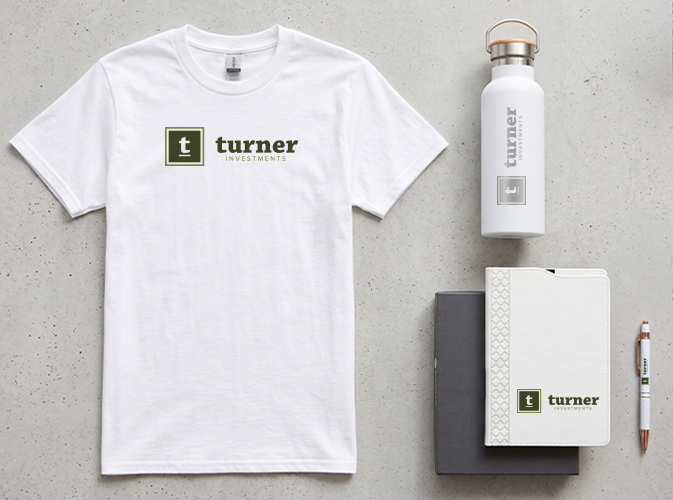
Branded apparel: A quality t-shirt or quarter-zip with clean, modern branding turns a candidate into a campus ambassador. For early-career recruiting programs where word-of-mouth among student networks matters, a piece of apparel that students are genuinely proud to wear is one of the highest-ROI items an employer-brand team can invest in. Shop promotional apparel
-
Reusable water bottles and drinkware: A quality branded water bottle is carried to class, to the gym, and to the library — generating brand impressions in every environment a student or early-career candidate inhabits. For organizations that want to signal sustainability and wellness values, a reusable bottle is the most natural and credible way to do it. Shop custom water bottles
-
Branded notebooks and journals: For professional and campus recruiting alike, a well-made notebook with a clean logo demonstrates that the organization values thinking, learning, and professionalism. A journal that gets used throughout the semester is a semester-long employer-brand impression. Shop custom notebooks
-
Eco-friendly and sustainable options: Items made from recycled materials, organic cotton, or with a sustainability message resonate strongly with Gen Z candidates who are actively evaluating whether an employer's stated values match its actual behavior. A recycled-material tote or a bamboo pen isn't just a giveaway — it's a signal.
Best Product Categories for Recruiting Events
Each category earns its place in a recruiting team's swag toolkit for different reasons — match the category to the engagement goal, not just the budget.
- Pens and writing instruments: Highest-volume, lowest-cost booth staple. Every candidate uses them at the fair and takes them home.
- Tote and drawstring bags: Grab-and-go carriers that hold every other piece of swag and display your logo to the entire hall for the duration of the event.
- Tech accessories: Phone stands, power banks, earbuds, and charging cables — the highest-engagement conversation-starter category with the strongest post-fair daily recall.
- Drinkware: Water bottles and tumblers that candidates use daily at school and work, keeping the brand visible for months after the fair.
- Journals and padfolios: Thoughtful mid-tier and premium prospect gifts that signal professionalism and quality in a way that a standard giveaway can't.
- Apparel: Turns candidates into campus ambassadors and signals culture — the highest-impact employer-brand item when quality is high and the design is clean.
- Wristbands and lanyards: Low-cost access, unity, and booth-visibility items that also serve a functional event purpose.
- Gift sets: Reserved premium bundles for top prospects — the highest per-unit investment and the highest per-candidate impact.
Recruiting Swag Standards: Quality Over Quantity
The single most common mistake recruiting teams make at career fairs is overspending on volume and underspending on quality. A table stacked with throwaway trinkets communicates something specific about the organization behind it — and early-career candidates, who have grown up surrounded by premium consumer products, read that signal clearly.
- Fewer, better items consistently outperform a large assortment of cheap giveaways — candidates notice, and what they notice becomes part of their perception of the employer brand.
- Favor daily-use utility over novelty — a useful item earns post-fair recall; a clever-but-useless item earns nothing once it's been admired at the booth.
- Keep branding clean and modern — the logo on a career-fair giveaway is the first visual impression of the workplace aesthetic, and it should look like the organization's website, not an afterthought.
- Match the swag to the candidate profile — students at a campus engineering fair want different things than experienced professionals at an industry hiring event.
- Avoid items that feel dated or cheap — a poorly made item can undercut an otherwise strong booth presentation and leave candidates with a negative first impression.
Engagement Mechanics: Turning a Giveaway Into a Conversation
The biggest differentiator between recruiting teams that fill their pipeline at a career fair and those that go home with a stack of unscanned business cards is the mechanics around the swag, not the swag itself. How items are presented and what candidates are asked to do to receive them shapes whether the interaction produces a warm lead or a polite grab-and-go.
- Tie swag to an action: A QR scan to a job board, a resume drop, a quick poll about career interests, or participation in a booth activity. The exchange of a small effort for a better item is natural and well-received in a hiring context.
- Use tiers openly: A grab-and-go item for everyone, a better item for candidates who engage with a specific activity, and a premium item for applicants and top prospects. Transparency about tiers motivates candidates to take the next step.
- Add QR codes and short URLs to bags, journals, and cards: Allow candidates to find your open roles from the item itself — extending the booth's reach past the moment of exchange and into the candidate's evening.
- Train booth staff to lead with a question before handing over the swag: "What kind of role are you looking for?" or "Have you heard of [company name]?" creates a natural opening that a handout alone never produces.
- Capture contact information in exchange for mid-tier and premium swag: A candidate who gives an email address to receive a power bank is a warm lead; a candidate who grabbed a pen is a stranger.
- Fairness matters: Offer the base-level item to every candidate who approaches, tie premium tiers to actions like applying or interviewing, and keep the criteria for elevated swag entirely action-based.
A Decision Framework for Choosing the Right Swag for Your Booth
Use this table to match your recruiting event scenario to the right product category, price range, and engagement tier.
Career Fair and Recruiting Swag Decisions At a Glance
Here is a quick-reference summary for career fair and recruiting product decisions:
- Best booth-traffic drivers: Pens, drawstring bags, and wristbands priced under $3 that are easy to grab and immediately useful.
- Best conversation starters: Tech accessories — phone stands, earbuds, and charging cables — tied to a QR scan or booth activity.
- Best application reward: A power bank, insulated tumbler, or quality journal reserved for candidates who apply or submit a resume on-site.
- Best premium prospect gift: A padfolio or curated gift set in small, reserved batches for top candidates who complete an on-site interview.
- Best employer-brand item: Reusable water bottles, quality apparel, and branded notebooks that extend your presence into a candidate's daily campus life.
The most important rules are to tier the swag, to tie it to actions, and to make sure the base-level item is available to every candidate who approaches. This approach is what turns a giveaway program into a recruiting strategy.
Shop Career Fair and Recruiting Swag
Amsterdam Printing supports recruiting teams and employer-brand programs across all four engagement scenarios — from high-volume booth-traffic drivers to premium top-prospect gift sets. Low order minimums, bulk pricing on high-volume items, free logo setup, and a satisfaction guarantee make it practical to build a tiered swag strategy that fits your recruiting calendar and your candidate pipeline.
Browse the full collection: Career Fair and Recruiting Promotional Products
Frequently Asked Questions
1. What are the best career fair giveaways?
The best giveaways depend on the goal. Pens, drawstring bags, and wristbands drive booth traffic at high volume and low cost. Tech accessories like phone stands and earbuds are the strongest conversation-starter category because candidates use them immediately and carry them daily. Power banks, tumblers, and journals work well as rewards for candidates who apply or submit a resume. Padfolios and curated gift sets belong in small, reserved batches for top prospects. In every tier, choose useful items with daily recall so your brand stays visible after the fair ends.
2. How do you get candidates to stop at a career fair booth?
Lead with an easy-to-grab, genuinely useful item and pair it with a quick question or booth activity. Grab-and-go staples like branded pens, tote bags, and wristbands pull candidates in from the aisle without requiring any commitment. A QR-code giveaway — "scan to see open roles, grab a charger" — converts that stop into a real engagement in thirty seconds. The item removes the friction; the question or activity creates the conversation.
3. What swag do Gen Z candidates want at recruiting events?
Gen Z favors quality over quantity and daily-use utility over novelty. Tech accessories, reusable drinkware, quality tote bags, and well-designed branded apparel land well with early-career candidates — especially items that signal values like sustainability and wellness. Cheap, dated trinkets can backfire by making the employer brand look careless or out of touch. The standard for Gen Z swag isn't expensive; it's intentional.
4. Should recruiters give every candidate the same swag?
A tiered approach is more effective. Offer a useful grab-and-go item to every candidate who approaches, a better item to candidates who engage with a specific action (applying, scanning, completing an activity), and a premium item to top prospects who interview on-site. Tie the tiers to actions, not personal characteristics, and be transparent about what earns what — most candidates respond positively to clear, fair criteria.
5. How much should you spend on recruiting swag?
Match spend to engagement intent. Booth-traffic drivers can start under $1 per unit in bulk. Daily-use grab-and-go items run $3 to $12. Conversation-starter tech accessories typically run $5 to $25. Application and resume-submission rewards land in the $10 to $30 range. Premium top-prospect gifts are appropriate at $20 to $75 in small quantities. Order the high-volume tier in bulk and reserve the premium tier for the candidates worth the investment.
6. How do you make a career fair giveaway lead to an application?
Tie the swag to the action you want. Add QR codes and short URLs to bags, cards, and journals that link directly to your job board or application portal. Reward a resume drop or on-site application with a mid-tier item — a power bank or a tumbler — so the action feels recognized and worth taking. Capture contact information in exchange for premium swag so follow-up is possible. The mechanics around the item matter more than the item itself.
7. What giveaways work best for campus recruiting versus experienced-hire events?
For campus and early-career fairs, lean on practical student gear: drawstring bags, water bottles, phone stands, quality notebooks, and apparel that will be worn on campus. For experienced-hire and professional events, upgrade the presentation: padfolios, premium tumblers, executive drinkware, and curated gift sets feel appropriate for candidates whose expectations have been shaped by years of professional experience. In both contexts, reserve the best items for the candidates who show the most genuine interest.