Promotional products may seem simple on the surface, but behind every branded pen, tote, or jacket is a carefully managed process that turns an idea into a real-world marketing asset. From the first planning conversation to the moment a customer puts your product to use, each stage plays a role in shaping how your brand is seen and remembered.
Understanding the full lifecycle of a promotional product can help you make smarter decisions, avoid missteps, and get more value from every order.
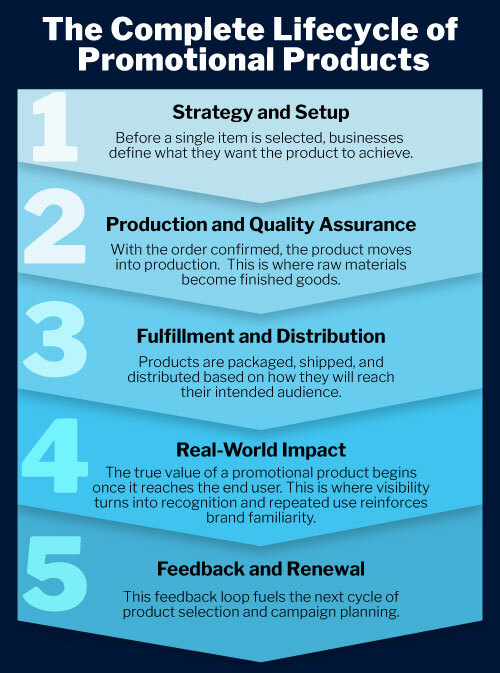
Stage One: Strategy and Setup
Every successful promotional product starts with a clear purpose. Before a single item is selected, businesses define what they want the product to achieve. That goal may be building brand awareness, supporting a product launch, driving booth traffic at a trade show, or strengthening customer loyalty.
From there, product selection and design take center stage. This stage includes choosing the right item, materials, colors, and imprint style to match both the audience and the brand. A giveaway for a conference crowd may call for portability and broad appeal, while employee appreciation items often lean toward higher perceived value and long-term use.
Once the product is selected and artwork finalized, the order is placed with specific quantities, timelines, and budget considerations locked in. This marks the official transition from concept to creation.
Stage Two: Production and Quality Assurance
With the order confirmed, the product moves into production. This is where raw materials become finished goods — and branding is applied through methods such as screen printing, embroidery, engraving, or digital printing.
Equally important during this stage is quality control. Each item is inspected to ensure it meets appearance and performance standards and that the imprint is aligned, legible, and consistent. This step protects both the customer’s investment and the integrity of the brand being represented.
Production timelines vary by product type and customization method, which is why planning plays such an important role in a smooth promotional campaign.
Stage Three: Fulfillment and Distribution
Once production is complete, the focus shifts to logistics. Products are packaged, shipped, and distributed based on how they will reach their intended audience. Some items are delivered in bulk to a business location for events or internal use, while others may be shipped directly to multiple recipients for campaigns that span multiple locations.
Fulfillment is more than just delivery. It is the moment the product is officially placed into circulation, ready to represent the brand in real-world settings.
Stage Four: Real-World Impact
The true value of a promotional product begins once it reaches the end user. This is where visibility turns into recognition and repeated use reinforces brand familiarity. A well-chosen item becomes part of someone’s daily routine, appearing at work, at home, or on the go, extending your reach far beyond the moment it was handed out.
Positive engagement can take many forms. The recipient may keep and use the product regularly, share it with others, or associate it with a positive experience tied to your brand. In some cases, branded products even appear in social media posts or workplace environments, multiplying their exposure organically.
Over time, products will naturally wear out, be replaced, or lose relevance. That decline is not a failure of the process, but a natural part of the lifecycle. The key is using performance insights to guide future campaigns.
Stage Five: Feedback and Renewal
Every promotional product creates data, even if it is informal. Sales teams notice which items spark conversations. Event staff see which giveaways disappear first. Customers mention which pieces they frequently use.
This feedback loop fuels the next cycle of product selection and campaign planning. Strong performers may become recurring staples, while underperforming items are replaced with smarter alternatives that better align with audience preferences and market trends.
Why Promotional Products Still Matter
Promotional products continue to be one of the most effective tools in the marketing mix because they combine utility with visibility. Unlike digital ads that disappear after a few seconds, a physical product stays in circulation and keeps delivering impressions over time. It also creates a tangible connection between a brand and its audience, which is something screens alone cannot replicate.
When chosen thoughtfully, promotional products support brand recognition, encourage loyalty, and keep businesses top of mind long after the initial interaction.
For a deeper look at how to select items that align with your goals, audience, and budget, check out the helpful guide on choosing the best promotional products for your business.