Branded merchandise is a powerful way to increase visibility, boost recognition, and connect with your audience. But a well-chosen product is only half of the equation —how your logo is presented makes a big difference. A thoughtfully placed and well-designed logo reinforces your brand identity and helps customers instantly associate your products with your business.
Key Takeaways:
- Effective logo design starts with a clear understanding of your brand identity, values, and target audience.
- Logos should be simple, scalable, and versatile enough to work across different product types, sizes, and materials.
- Strategic placement varies by product—what works on apparel may not work on drinkware or bags.
- Consistency in logo placement across all branded items builds stronger brand recognition over time.
- High contrast, adequate clear space, and proper file quality are essential for ensuring logo visibility on promotional products.
Here’s how to ensure your logo looks its best on every item you brand:
-
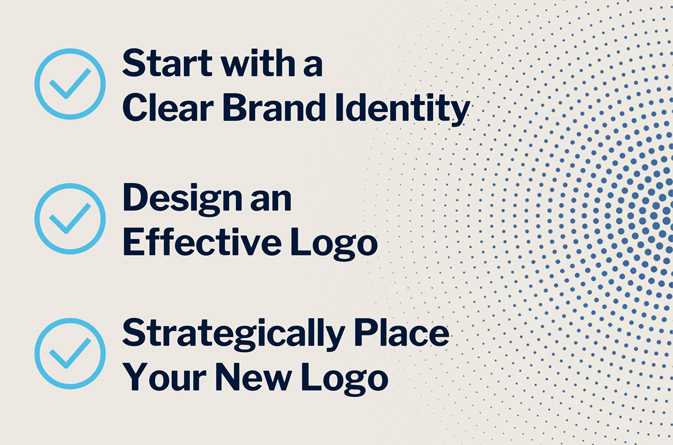
Start with a Clear Brand Identity
Before you put your logo on a product, it’s important to understand what your brand stands for. This foundation guides every design decision you make — from color choice to font style to logo size.
- Define your brand values
What message are you trying to send? Are you modern and minimalist, bold and playful, or classic and professional? Your logo should reflect your brand’s personality and mission.
- Understand your audience
Think about who you’re trying to reach. A logo that appeals to young creatives may not resonate with a corporate client base. Knowing your audience ensures your design connects.
- Evaluate the landscape
Take note of how other brands in your space present themselves visually. This can help you identify trends, avoid clichés, and stand out with a unique, memorable look.
-
Design a Logo That Works Across All Formats
An effective logo needs to adapt. Whether it’s printed on a custom pen or stitched on a branded jacket, it should always be clean, legible, and instantly recognizable.
- Keep it simple
Complex graphics can get lost when resized or applied to different materials. A clean, uncluttered design is more versatile and easier to remember.
- Aim for versatility
Your logo should look great in full color, black and white, large-scale, or small-scale. Consider creating variations (horizontal, stacked, icon-only) to give yourself options while staying on-brand.
- Choose the right colors and fonts
Stick to a defined color palette and consistent typography. These design elements reinforce your brand’s visual identity and help create a cohesive look across products.
- Add a tagline (if it makes sense)
A short, catchy tagline can complement your logo on larger items like personalized tote bags or drinkware. Keep it secondary to the main design so it doesn’t crowd the logo.
-
Use Strategic Logo Placement
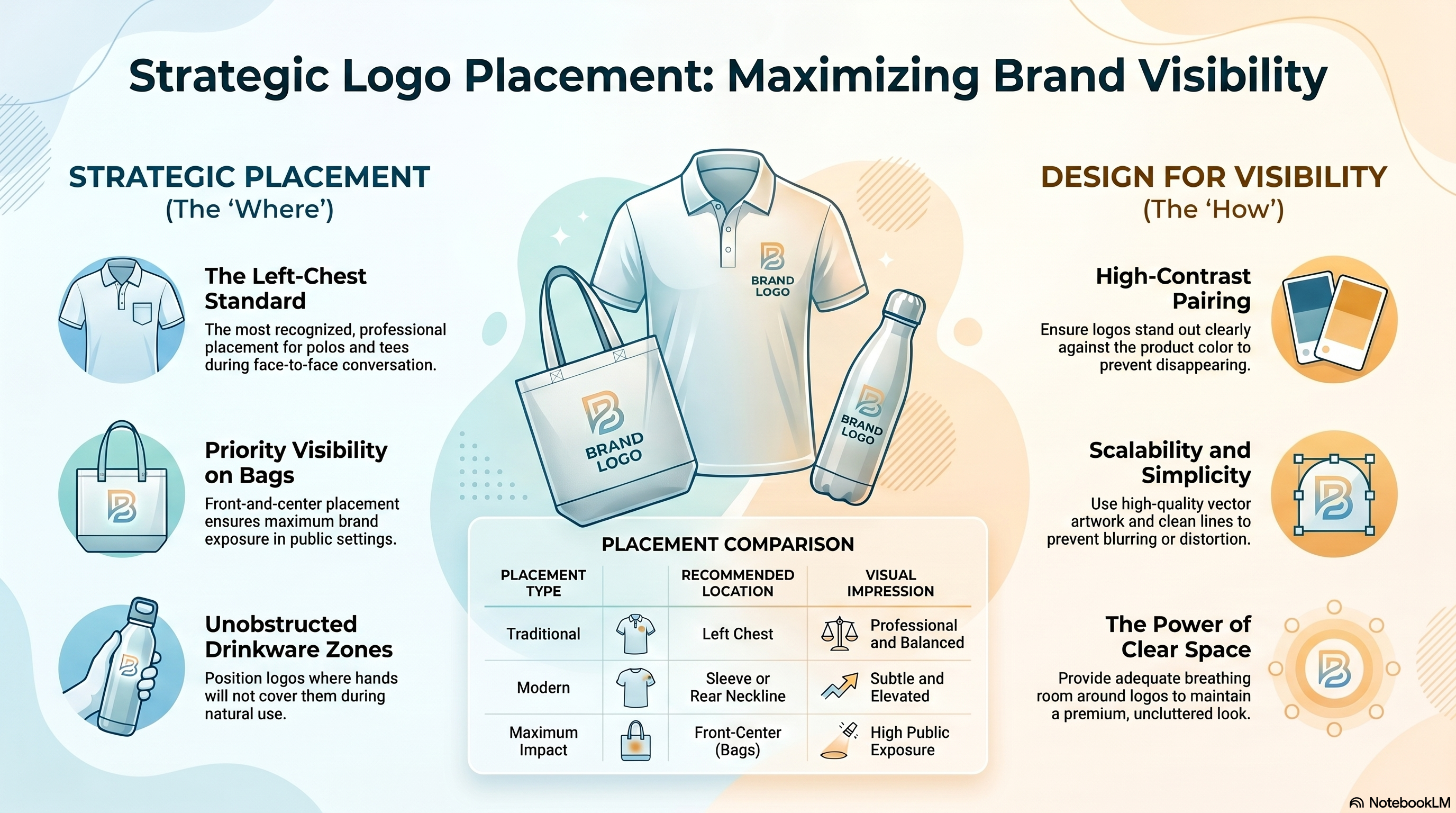
Once your logo is ready, think about where and how it appears on the product. The right placement draws attention while maintaining visual appeal. Strategic logo placement varies by product type, and understanding general placement guidelines can help ensure your brand stays visible and professional across all items, as outlined in this logo placement guide.
- Be consistent
Using your logo the same way across different items builds recognition. Maintain consistency in spacing, orientation, and color usage.
- Think product by product
Logo placement isn’t one-size-fits-all. What works on a branded water bottle might not work on a notebook. Choose positions that make the logo visible but don’t overwhelm the product’s design.
- Balance branding and style
The best branded products are those that people want to use. A large, overly dominant logo can make a product feel less stylish or personal. Sometimes, subtle touches — like brand colors or a small logo near the seam —can be just as effective.
- Test and adjust
If you're launching a new merch line or updating your branding, don’t be afraid to get feedback. Ask colleagues or customers how they perceive the design and refine as needed.
For a deeper look at how placement varies by product type—including specific guidance for apparel, bags, and drinkware—explore our guide on how to strengthen brand impact with smart logo design and placement.
Your Logo, Your Story — Make it Count
More than a mark, your logo is a visual handshake with your audience. When applied thoughtfully, it turns everyday products into brand advocates. Whether you’re creating gifts, giveaways, or merchandise to sell, taking the time to implement your logo effectively will ensure your brand looks as good in the real world as it does online.
FAQs
-
How should I design a logo for promotional products?
Design a logo that is simple, scalable, and versatile. It should look clear and recognizable whether printed small on a pen or large on a tote bag.
-
Where is the best place to put a logo on promotional items?
The best placement depends on the product. For apparel, the left chest is standard. For bags, front-center works best. For drinkware, place logos where hands won't cover them.
-
Why does logo placement matter on branded merchandise?
Logo placement affects how visible and recognizable your brand is. Strategic placement ensures your logo is seen clearly and consistently across all items.
-
What file format should I use for logo printing on promotional products?
Vector-based formats like SVG, EPS, or AI are recommended because they remain sharp and clear at any size without pixelation.
-
How can I make my logo stand out on promotional products?
Use high contrast between the logo and product color, keep the design clean and uncluttered, and ensure adequate spacing around the logo for visual clarity.
Published: 6/26/2025 | Updated: 6/12/2026