
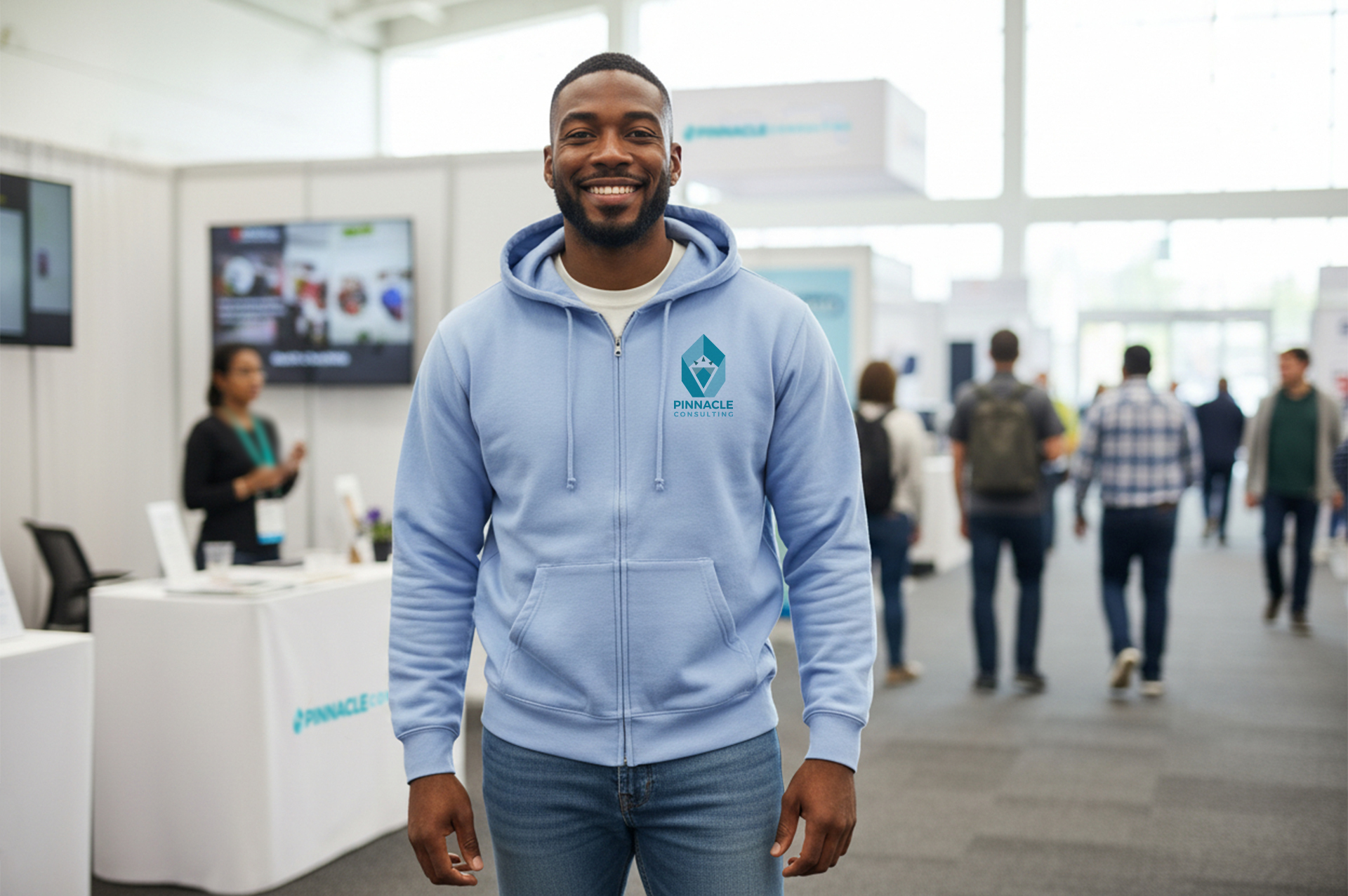
When brands think about promotional products, apparel often gets treated like a checkbox:
Shirts? ✔
Hoodies? ✔
Hats? ✔
But that mindset misses the bigger picture.
When you evaluate promo through a smarter budgeting lens — cost-per-wear (CPW) and cost-per-impression (CPI) — sustainable promotional apparel stops looking like a “premium upgrade” and starts looking like one of the most efficient marketing investments available.
In this blog post, we’ll break down:
- Why sustainable apparel consistently outperforms traditional promo
- Which materials actually deliver long-term value
- How to choose the right eco-friendly products without overcomplicating things
- How to budget realistically without blowing up your promo spend
Why Sustainable Promotional Apparel Works (Especially for Your Budget)
Most traditional promo products fail quietly. They’re worn once (if ever), shoved into a drawer, or tossed after an event. Sustainable promotional apparel does the opposite — it earns a spot in someone’s regular rotation.
Here’s why eco-friendly promos perform better:
- Higher wear rates — Better materials, better fit, and better design mean people want to wear it.
- Longer lifespan — Eco-friendly garments are built to last, multiplying impressions over time.
- Stronger brand alignment — Consumers care about sustainability. Apparel that reflects those values builds trust and recall.
- Lower CPW and CPI over time — Even with a higher upfront cost, repeated use drives the real cost way down.
Quick example:
A $12 conventional tee worn twice = $6 per wear.
A $28 eco-friendly hoodie worn 40 times = $0.70 per wear, plus hundreds (or thousands) of impressions along the way.
Cost-Per-Wear & Cost-Per-Impression: The Metrics That Actually Matter
Start with Cost-Per-Wear (CPW).
CPW = Total cost ÷ estimated number of wears.
This is where sustainable promotional apparel really pulls ahead. Premium pieces like hoodies, crewnecks, elevated tees aren’t worn once and forgotten. Because they’re comfortable, durable, and designed like retail (not swag), they’re often worn 30–100 times or more over their lifetime.
Then there’s Cost-Per-Impression (CPI).
CPI = Total cost ÷ estimated impressions.
Every time someone wears branded apparel in public — at the gym, in airports, coffee shops, offices, or on social — your brand earns visibility. A single well-made hoodie can deliver thousands of impressions in a year, without additional spend.
When you evaluate apparel through CPW and CPI instead of unit price alone, the conclusion is clear: sustainable, high-quality apparel consistently delivers more value and longer-lasting impact.
Sustainable Materials That Deliver Real ROI
Not all “eco-friendly” materials are created equal. If you’re budgeting smartly, prioritize materials that balance sustainability, durability, and comfort.
Organic Cotton
- Grown without harmful pesticides
- Softer feel and better for sensitive skin
- Ideal for tees and lightweight apparel
Recycled Polyester (rPET)
- Made from recycled plastic bottles
- Durable, moisture-wicking, and long-lasting
- Great for performance wear, outerwear, and blends
Organic Cotton / Recycled Poly Blends
- Best of both worlds
- More durable than 100% cotton
- Lower environmental impact than virgin synthetics
Low-Impact Dyes & Ethical Manufacturing
These may not always show up on a spec sheet, but they matter. Ethical production often correlates with better construction, fewer defects, and longer garment life, which directly improves CPW.
How to Get Started (Without Overthinking It)
If you’re new to sustainable promo apparel, start focused—not broad.
1. Choose One “Hero” Item
Instead of spreading budget across multiple low-impact pieces, invest in one standout product:
These deliver the highest wear frequency and impressions.
2. Prioritize Fit + Neutral Design
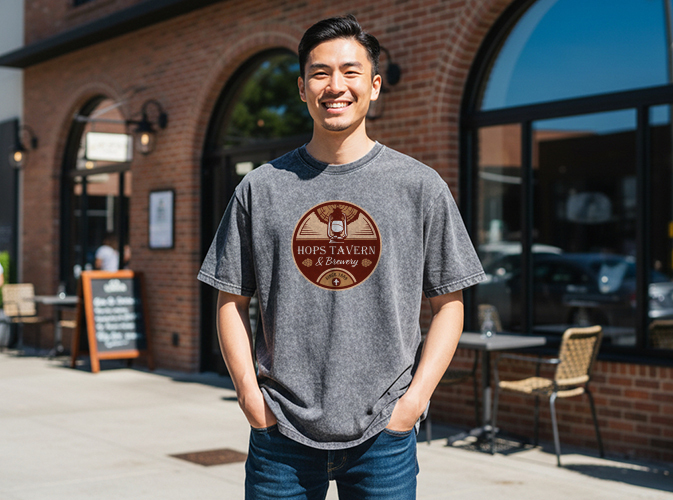
Timeless colors like black, heather gray, navy, olive, get worn more often. Loud, event-specific graphics age fast.
3. Brand Subtly
Small chest logos, sleeve prints, or woven labels feel more like retail than promo and dramatically increase wear rates.
4. Match the Product to the Audience
Employees, customers, and event attendees have different needs. An eco-friendly hoodie for employees may justify a higher spend than a giveaway tee at a large conference.
Costs & Budgeting: What to Expect
Yes, sustainable promotional apparel costs more upfront but usually less than people assume.
Typical branded bulk pricing:
- Sustainable tees: $10–18
- Crewnecks: $20–30
- Hoodies: $25–45
Instead of asking, “How cheap can we go?” Ask: “How many wears and impressions do we want this to generate?”
Smarter Budgeting Tips
- Reduce quantity, increase quality
- Spend more on items with long wear cycles
- Use CPW to justify spend internally
- Compare apparel ROI to paid ads — promo often wins
A hoodie worn weekly for a year can outperform thousands of dollars in digital ads, with the added benefit of real-world brand goodwill.
Why Eco-Friendly Apparel Deserves a Seat at the Budgeting Table
Sustainable promotional apparel isn’t just a values play — it’s a smarter budgeting strategy.
When you measure promo success by cost-per-wear and cost-per-impression instead of unit price, sustainable products consistently deliver better ROI. They last longer. They get worn more. And they turn your brand into something people choose to represent.
If you want promo that actually works, sustainable promotional apparel isn’t the future.
It’s the benchmark.