
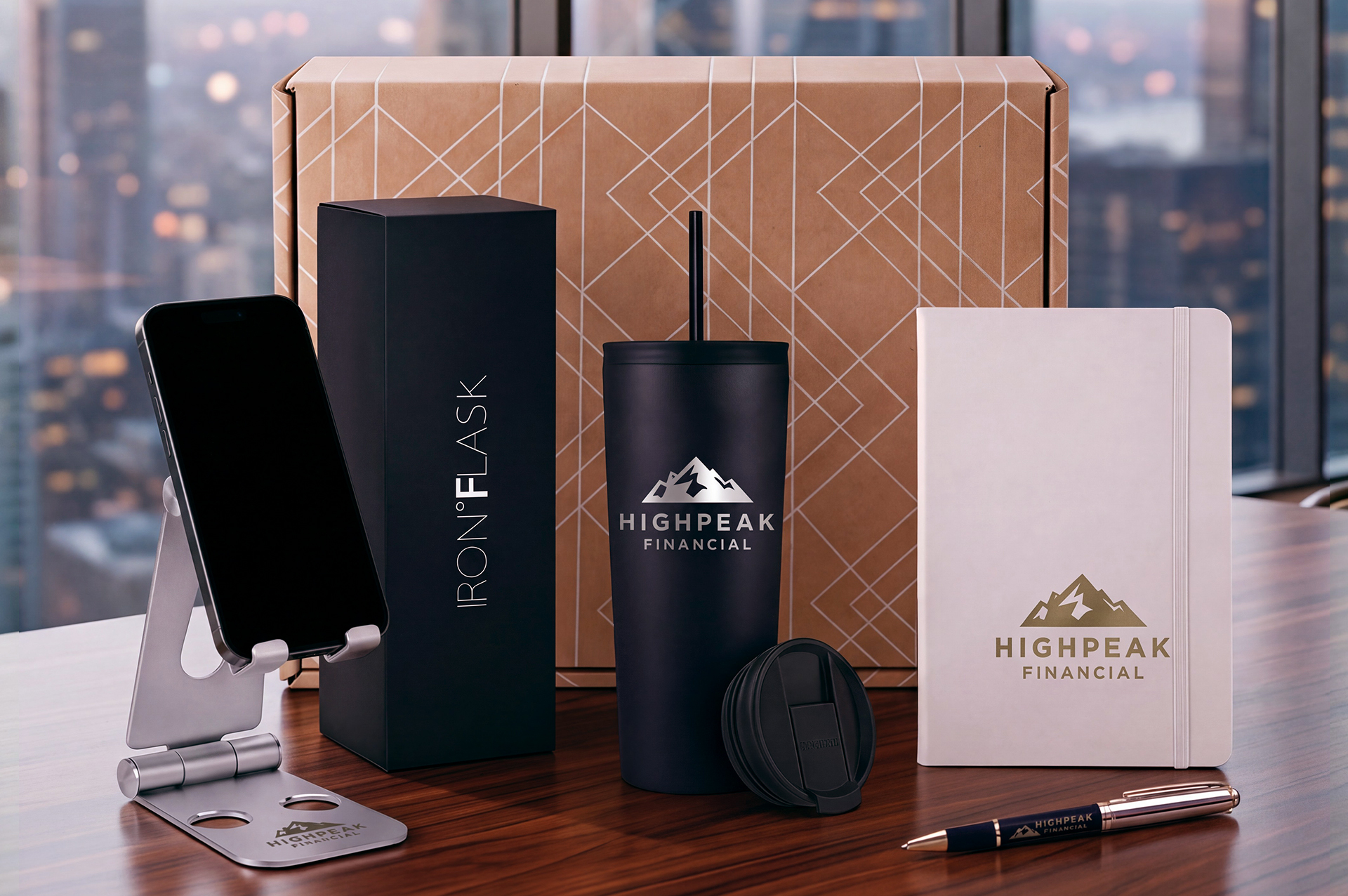
When a new hire starts in an office, their desk does some of the welcoming for them. When they start from home, nothing does — unless you send it. A well-built remote employee welcome kit is the first physical touchpoint a new hire has with the company, and it sets the tone for everything that follows.
This post covers the five building blocks every kit should include, how to tier your investment by budget, what to adjust by role, and how to run a program that scales with your hiring.
KEY TAKEAWAYS
- A remote welcome kit replaces the office desk experience and gives new hires their first tangible connection to the company.
- The five building blocks of a strong kit are branded apparel, drinkware, a notebook and pen, a tech accessory, and a personal welcome note.
- Useful, daily-use items outperform novelty every time.
- Budget tiers range from a lean Essentials Kit at $25 to $40 to a Premium Kit at $90 and up for senior hires or culture-forward teams.
- Treat kits as a repeatable program with a pre-selected core set and a reorder process to simplify the process.
Why Remote Welcome Kits Matter
Remote employees receive their first impression of the company from a spare bedroom or a kitchen table — no tour, no office buzz, no one stopping by to say hello. The welcome kit fills that gap. Gallup data indicates that employees with a strong onboarding experience are significantly more likely to report high engagement and intent to stay, and a physical kit is one of the most tangible signals that the company thought about this person before they showed up.
The items that land best are the ones new hires reach for on day two, day ten, and day thirty. A hoodie worn on video calls. A tumbler on the desk. A notebook filled by the end of the first week. Novelty items get set aside, but useful, on-brand items keep working.
The 5 Building Blocks of a Great Welcome Kit
- Branded apparel. Apparel is the highest-impact item in most kits because it gets worn on calls, at the coffee shop, and on errands — putting the company brand in motion every day. Shop custom hoodies | Shop custom t-shirts
- Drinkware for the home desk. An insulated tumbler, a travel mug, or a branded water bottle lives on the desk through every meeting and work block. Shop water bottles | Shop travel mugs
- A notebook and pen. A branded notebook and quality pen are immediately useful and encourage engagement from the start. Shop branded notebooks | Shop custom pens
- A tech accessory. Remote employees depend on their devices, and something that keeps those devices running earns immediate use. Shop power banks | Shop tech accessories
- A personal welcome note. A handwritten note from the manager or team lead takes two minutes and changes the entire feeling of the kit.
Welcome Kit Ideas by Budget
Three tiers cover most hiring scenarios:
- Essentials Kit ($25 to $40 per hire). Branded tee or drawstring bag, water bottle, notebook, pen, and welcome card. A dependable day-one box that covers all five building blocks without overinvesting.
- Signature Kit ($50 to $80 per hire). Branded hoodie, insulated tumbler, notebook, pen, and power bank in a reusable tote. The most popular tier — and a kit that gets photographed and posted.
- Premium Kit ($90 and up per hire). Hoodie, blanket, travel mug, tech accessory, and a notebook set in a branded gift box is the right choice for senior hires, executive onboarding and culture-forward teams. Shop gift sets | Shop custom blankets
Tailoring the Kit by Role
A few adjustments make the standard kit feel more relevant to the person receiving it:
- Entry-level and early-career hires. Lean into apparel and drinkware — items they’ll use and show off. A quality hoodie has outsized impact at this level.
- Sales and client-facing roles. Upgrade to a padfolio or polished notebook set and add a distinctive pen. These hires use professional-looking items in client calls and should feel equipped from day one.
- Engineering, product, and creative teams. A tech accessory is the highest-utility item here. A power bank, cable organizer, or quality earbuds resonates more than a comfort item.
- Executives and senior hires. Move to the Premium Kit. A curated, high-quality box with subtle branding and a personal note from leadership signals that the organization pays attention at this level.

Running Welcome Kits as a Repeatable Program
Start with a core set of three to four items that stays consistent across all hires — typically a tee or hoodie, drinkware, a notebook, and a pen. Add role-specific items on top of that base, and keep the core reorderable in bulk so you’re never scrambling when a new offer goes out.
Shipping is straightforward. Provide home addresses at checkout and we’ll drop-ship directly to each new hire’s door — no inventory required on your end. Plan for two to three weeks of lead time on branded items and keep a small buffer for last-minute hires.
Remember: A welcome kit is a first chapter, not the full story. A 30-day follow-up item and a 90-day milestone gift extend the onboarding experience past the first week.
Send Something Meaningful to Every Remote Employee
A remote welcome kit doesn’t have to be expensive to be effective. The goal is to give a new hire something useful, something on-brand, and something that tells them they were expected.
Build your kit at AmsterdamPrinting.com.
FAQs
1. What should be in a remote employee welcome kit?
Every kit should cover five things: branded apparel, drinkware for the home desk, a notebook and pen, a tech accessory like a power bank, and a personal welcome note. Build from that base and adjust for budget and role. Items that earn daily use are always more valuable than items that look good once.
2. How much should a company spend on a new hire welcome kit?
Most programs land in one of three tiers: Essentials at $25 to $40, Signature at $50 to $80, and Premium at $90 and up. The right number depends on role level, how frequently you’re hiring, and how much the company invests in the new hire experience.
3. When should a welcome kit arrive for a remote employee?
Before or on day one, so the new hire can open it before their first log-in. Plan for two to three weeks of lead time on branded items and keep a small buffer in stock for last-minute hires.
4. What branded items do remote employees use the most?
Apparel and drinkware top the list because they earn daily use. Quality notebooks and pens see heavy early-tenure use. Power banks and tech accessories are the most immediately practical items for device-dependent remote workers.
5. How do you ship welcome kits to employees’ home addresses?
Most promotional product suppliers can drop-ship directly to individual home addresses when you provide a shipping list at checkout. For programs with frequent hiring, set up a pre-selected kit that can be reordered quickly and allow two to three weeks for production and delivery.